The Invisible Shield: How to Protect Your Building from Salt Air and the IEE in Ibiza
Ibiza’s microclimate is like that unexpected guest who settles into homes without asking permission. Sometimes we barely notice it, yet it is there, with sticky humidity, sunlight that seems never to rest, and air infused with the sea. Together, as if working in tandem, these factors gradually wear down buildings without making much noise. Concrete carbonation and the internal corrosion of reinforcements go unnoticed until cracks or strange stains suddenly appear. For many, the key lies in truly understanding this invisible process because only by anticipating problems is it possible to avoid damage that can become very costly in older structures, especially those that have already seen many years of use.
Why Is My Building Deteriorating in Ibiza? The Climate’s Invisible Enemy
There is no doubt about it: Ibiza, which appears to many as a paradise, imposes a daily challenge on structures that is difficult to ignore. Constant humidity and scorching sun, combined with the ever-present salt-laden marine aerosol, act as a form of accelerated aging for concrete, particularly in coastal neighborhoods such as Sa Penya, La Marina, or Dalt Vila.
In reality, what happens is as complex as clockwork. Humid air gradually allows carbon dioxide to penetrate the walls. This reaction, called carbonation, wears down the natural shield that once protected the steel inside the concrete, turning the material into an easy target for deterioration.
But the story does not end there. The sea, through tiny saline particles, introduces chlorides that seep into the building’s core. When these chlorides reach a certain critical concentration, they attack the steel aggressively, causing corrosion. The result is that the metal expands, cracks the concrete, and weakens it from within like an invisible termite. And if UV radiation also erodes any protective paint, the entry of more water and salts becomes only a matter of time, further complicating the building’s lifespan.
The IEE in Ibiza: What Is It and Why Is It an Unavoidable Obligation?
When the Building Evaluation Report (IEE) is mentioned, people often think of bureaucracy, but in reality, it is an essential and frankly irreplaceable tool for anticipating risks and planning maintenance. In fact, Ibiza’s authorities pay close attention to compliance, especially when reviewing buildings in historic centers.
Who Is Required to Undergo the IEE and How Often?
Almost no one is exempt. Residential blocks over 50 years old, in particular, are required to pass the IEE and repeat the procedure every decade. As expected, only a qualified professional, generally an architect or building engineer, can oversee the report, which covers three important areas:
- Review of the property’s structural condition and safety
- Accessibility analysis for all users
- Certification of energy efficiency
Failing to comply with the IEE is not just a bad idea: it prevents access to any public rehabilitation aid and may result in administrative penalties, increasing headaches for property owners.
Special Requirements for Buildings in Historic Areas
However, in places rich in history such as Sa Penya, La Marina, and Dalt Vila, the level of demand is far from modest. The Consell d’Eivissa closely scrutinizes proposals to ensure that no project harms the architectural heritage. As a result, for interventions of a certain scale, the process becomes notably more complex:
| Step | Description | Responsible Entity |
|---|---|---|
| 1. Diagnosis | The IEE is carried out by an expert after a thorough inspection. | Owner / Community |
| 2. Technical Project | Drafting of a detailed project if the work affects protected elements. | Owner / Community |
| 3. Authorization | Request explicit permission before touching anything significant. | Consell d’Eivissa |
| 4. Execution | Carry out the rehabilitation according to the approved plan and the technician’s report. | Construction company |
For straightforward work, it is usually sufficient to submit a responsible declaration to the local council. Nevertheless, any project that affects key aspects of the building necessarily requires the full process, something authorities review without exception.
How to Repair Your Façade: The Battle Between Traditional Lime and Plastic Paints
Choosing the right façade products, surprisingly, can make the difference between extending a building’s lifespan or complicating it beyond repair. The island’s climate is unforgiving: unsuitable materials can turn a simple repair into the prelude to major humidity and salinity problems. Understanding how each behaves therefore becomes very important.
The Traditional Solution: Why Lime Mortars Let the Wall ‘Breathe’
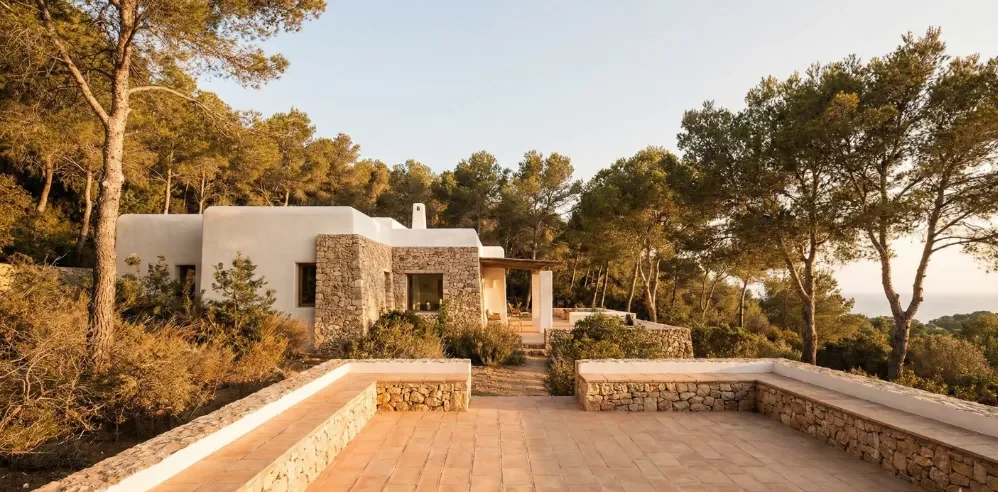
For centuries, lime mortars have been favored by professionals and craftsmen, especially in historic buildings. Their great advantage is that they form a kind of “breathing” skin, allowing vapor to escape and preventing moisture from becoming trapped. This characteristic stands out for three main reasons: el-escudo-invisible-cmo-protege…
- Prevent stagnant moisture: They allow the wall to dry effortlessly, keeping mold and visible salts at bay.
- Dissipate stress with flexibility: Lime acts as a buffer against the small cracks and adjustments the structure undergoes.
- Provide natural defense: Their antibacterial and antifungal properties simplify overall façade preservation.
The Risk of Modern Solutions: When Plastic Paint ‘Suffocates’ the Façade
The rise of plastic paints and waterproof coatings has brought convenience, but also considerable risks. When used in humid environments, they create a kind of “plastic wrap” that prevents internal vapor from escaping. Ultimately, instead of solving the problem, many factors make it worse:
- Moisture becomes trapped like in a bag, increasing pressure.
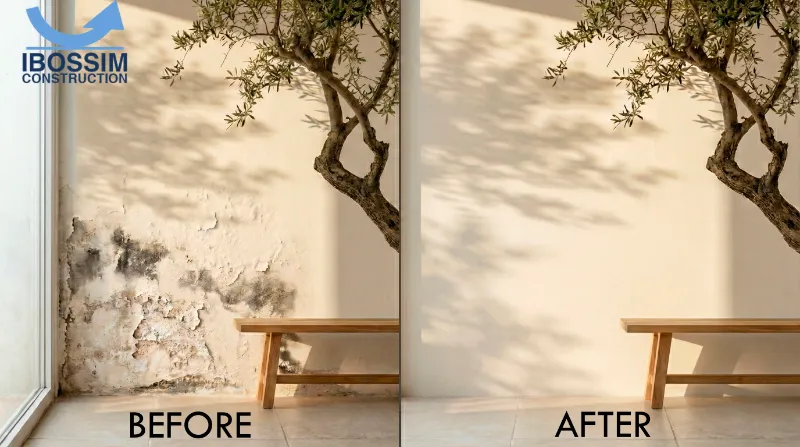
- Salts crystallize beneath the paint, producing unsightly bubbling and peeling.
- The substrate eventually deteriorates, and microorganisms appear everywhere.
In the end, a supposedly innovative solution can ruin the wall and become far more expensive to repair in the long term—something more and more experts acknowledge after seeing the results.
How to Finance Rehabilitation: The IEE as a Key to European Grants
Complying with the IEE is not only mandatory but can also open the door to remarkable financial assistance. Right now, those who know how to take advantage of the European NextGenerationEU grants can truly transform a building’s lifespan, improve energy efficiency, and resolve issues related to aging.
What European Aid Is Available and What Does It Cover?
These grants aim to achieve more comfortable, sustainable, and, of course, safer housing. Providing a favorable IEE or a sufficiently detailed improvement plan makes it possible to request funding for the following common expenses:
- Up to 80–100% of the cost of comprehensive renovations, especially for families in financial difficulty.
- Efficiency improvements, such as adding façade insulation (ETICS), particularly effective against salinity.
- Window replacement, structural damage repairs, and everything related to building accessibility.
- Costs of technical reports and documentation such as the Building Logbook. el-escudo-invisible-cmo-protege…
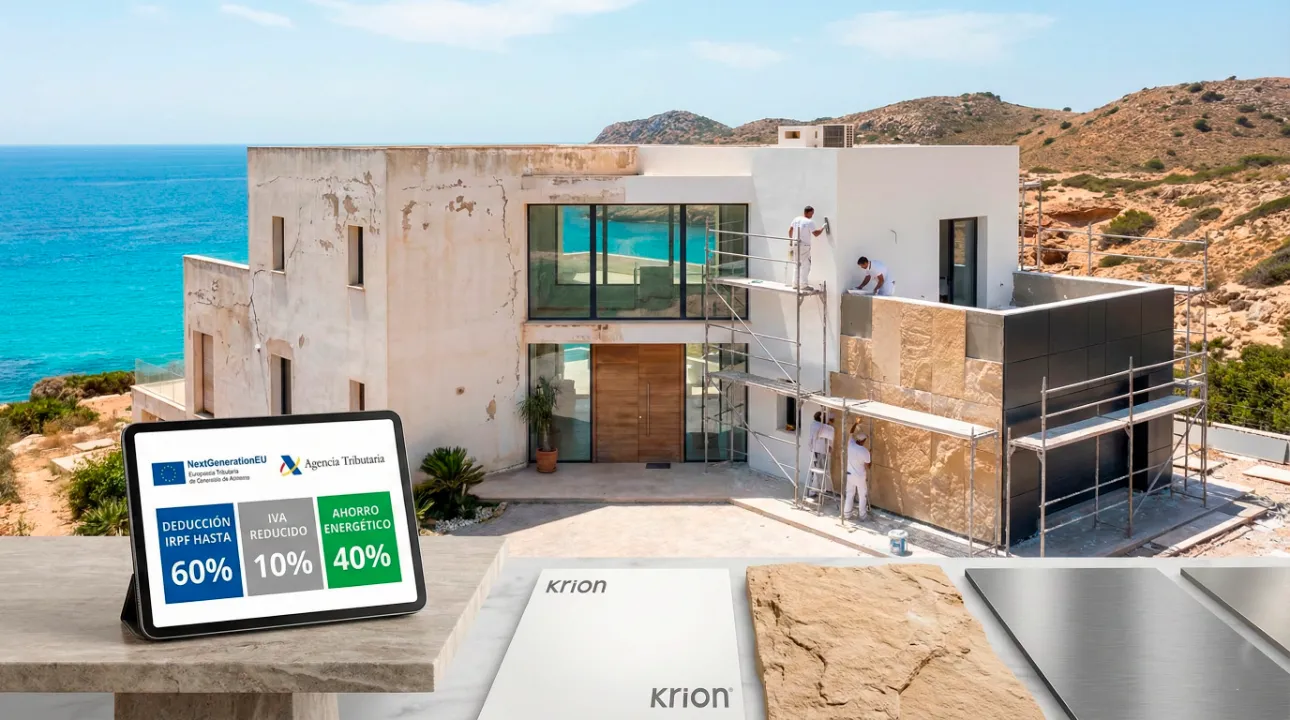
And as if that were not enough, the list of benefits includes incentives such as a reduced VAT rate of 10% and personal income tax deductions ranging from 20% to 60%, depending on the scale of the work and the results achieved.
What Is the Deadline You Cannot Ignore?
Pay attention to the deadlines: in the Balearic Islands, the final day to apply for these grants is June 30, 2025. Starting the IEE process as early as possible will prevent unpleasant surprises if, as expected, the flood of applications delays official timelines.
cument and has become a genuine passport to property improvement. Those who act early not only comply with legislation and strengthen safety but can also obtain exceptional funds to revitalize the property, modernize it, and protect it from Ibiza’s climate for many years.
In short, rehabilitating on time, choosing noble materials such as lime, and turning to European aid while it is still available is the most sensible strategy for ensuring that a building in Ibiza preserves its splendor. It is no minor detail: it is about protecting an investment and guaranteeing that the island’s characteristic architecture reaches future residents and generations in good condition.