November 4, 2026
Waterproofing Warranties and Real Lifespan in Ibiza: What Contracts Don't Say
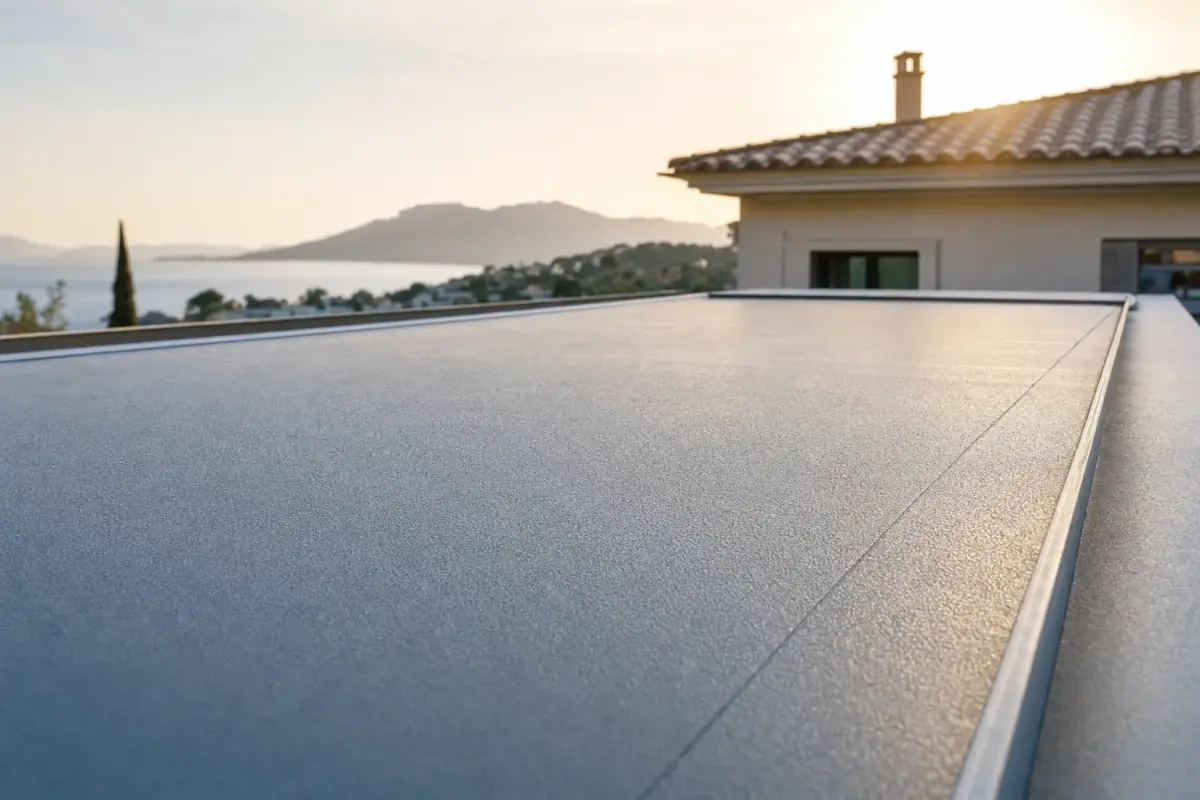
The manufacturer warranty for a waterproofing system in Ibiza will tell you the membrane is guaranteed for 15 or 20 or even 25 years. The real lifespan, in the actual mediterranean coastal climate, with actual installation quality and actual maintenance discipline, will tell you something different. Knowing the difference between the contract number and the field number is what separates a 20-year roof from a 7-year leak. This guide compares the six main waterproofing systems used in Ibiza villas with real lifespan data, failure signals, and the maintenance work the contract rarely mentions.
Why warranty and lifespan are not the same number
A manufacturer warranty is a legal commitment by the producer that the material itself will not fail under specified conditions. It excludes installation defects (which are the installer’s responsibility), substrate failures, mechanical damage, chemical attack, and pretty much anything that is not “the material spontaneously decomposing”. The real lifespan, by contrast, is the median time before a typical installation in a typical building under typical maintenance starts leaking. The two numbers can differ by 5-15 years.
| System | Mfr warranty | Real lifespan Ibiza | Failure signal | Re-application | Annual maintenance |
|---|---|---|---|---|---|
| Liquid polyurethane (PU) | 15-20 years | 12-18 years | Hairline cracks at joints | Topcoat refresh every 8 years | €80-150 inspection |
| EPDM membrane | 20-25 years | 18-25 years | Seam separation, lifting corners | Seam re-welding at 12-15 years | €60-120 |
| Modified bitumen (SBS/APP) | 10-15 years | 8-14 years | Surface bubbling, granule loss | New top layer every 12 years | €100-200 |
| Crystallising cement | ”Lifetime” | 20-30 years (substrate-bound) | Cracks in substrate concrete | None typically | €50-100 |
| Mortex / microcement | 10 years | 15-25 years (pools, indoors) | Hairline surface micro-cracks | Re-seal every 5-7 years | €80-150 |
| Polyurea | 15-20 years | 15-22 years | UV chalking, surface dulling | UV topcoat every 8-10 years | €100-180 |
“Waterproofing failures in residential coastal Mediterranean construction are almost always installation-related, not material-related. The most premium membrane installed with poor substrate preparation, inadequate slope, or wrong primer fails within five years. The most basic product installed correctly with proper detailing performs to its full theoretical lifespan. The investment to make is in installation quality, not in moving up one membrane grade.”
Asociación Nacional de Impermeabilizadores y Cubiertas (ANI), 2026 technical handbook
What the warranty contract does not cover
Read any manufacturer warranty for waterproofing and notice the exclusions. Among the most common: installation by non-certified installer (voids warranty), substrate moisture above 5 % (must be measured and documented), missing or wrong primer (most common failure trigger we see), UV exposure beyond rated limit, ponding water beyond 48 hours (poor drainage design), chemical attack from pool chemicals or salt, mechanical damage from foot traffic or maintenance equipment, and failure to perform documented annual maintenance.
The result: when a roof leaks at year 8 of a 15-year warranty, the manufacturer’s first response is to request documentation of every annual maintenance, original installer certifications, and substrate moisture readings from installation day. Without these, the warranty rarely pays.
The maintenance that actually preserves lifespan
Three maintenance tasks deliver 80 % of the lifespan preservation. Annual visual inspection after the autumn rainy season — check seams, edges, drains, penetrations. Drain clearing before October — clogged drains create ponding that destroys any membrane. UV topcoat refresh at the manufacturer-specified interval (typically 7-10 years for liquid systems, longer for sheet membranes). Skip any of these and the real lifespan compresses by 30-50 %.
For more on zone-specific waterproofing, see our zone-by-zone waterproofing guide and the broader invisible shield framework. Pool-specific waterproofing is covered in pool waterproofing.
The decennial liability question
Spanish law (Article 17 LOE) provides decennial liability for structural defects, which includes waterproofing failures that affect habitability. This is different from the manufacturer warranty — decennial liability is held by the contractor and their insurance, applies for 10 years from completion, and is triggered by leaks affecting habitability regardless of manufacturer warranty terms. Both protections coexist; in practice, decennial liability is the more useful one for owners because it covers installation defects, not just material defects.
The four substrate conditions that determine real lifespan
Almost every premature waterproofing failure traces back to substrate preparation, not membrane quality. Four conditions matter and all four must be controlled.
Substrate moisture. Most modern waterproofing systems require the underlying concrete or render to be below 4-5 % moisture content at the moment of application. In Ibiza’s coastal climate, this often demands either a dedicated drying period (sometimes 4-6 weeks) or active dehumidification. Installations done with substrate at 8-10 % moisture — common in rushed projects — fail at the bond interface within 18-30 months.
Substrate flatness. Liquid systems can mask defects up to 3-5 mm; sheet systems cannot. A flat-roof surface with localised dips of 8-15 mm creates ponding water that destroys any membrane regardless of its rated lifespan. Substrate leveling is the unglamorous step that determines outcomes more than the membrane brand.
Substrate slope. Every flat roof needs a minimum 1.5-2 % slope toward drains. Older Ibizan flat roofs often have insufficient slope — sometimes literally flat — and the only honest solution is to add a screed of correct slope before applying any new waterproofing. Trying to compensate slope with membrane thickness never works.
Substrate cleanliness and adhesion. Old paint residue, dust, oils, plasticisers from previous membranes — all reduce adhesion. A proper installation includes mechanical surface preparation (shot-blasting or grinding) and primer specifically matched to the membrane chemistry. Skipping primer is the single most common installation shortcut we audit, and accounts for roughly 40 % of premature failures.
How insurers and warranty claims actually work
When a roof or terrace starts leaking and you call the manufacturer for a warranty claim, the process follows a predictable sequence. First the installer is contacted — usually the manufacturer redirects there because installation responsibility is the most common cause. The installer inspects, either accepts responsibility (rare) or blames the substrate or maintenance. If installation responsibility is rejected, the manufacturer’s technical service sends an inspector who collects samples, checks the original installation file, and writes a report. The report determines whether the claim is paid — and “no documented annual inspections” is the single most common reason to reject. Owners who treat the annual inspection as optional discover, when claiming, that it was effectively mandatory.
Decennial liability claims work differently: they go through the contractor’s insurer, who appoints an expert to assess the failure. The owner does not need to prove fault, only that the failure affects habitability and is within the 10-year window. This is procedurally simpler than a manufacturer warranty claim — another reason to favour properly insured contractors over those operating without it.
How IBOSSIM handles waterproofing warranties
Our waterproofing projects include three commitments beyond the manufacturer warranty. Annual inspection contract (€80-150) that documents the maintenance history needed to keep the manufacturer warranty active. Substrate moisture certification at the time of installation (kept on file). Detailed product specification with primer brand, application thickness, and verification methodology. The combination makes warranty claims actually collectible if needed, and reduces failure probability substantially.
Frequently asked questions
Which waterproofing system has the longest real lifespan in Ibiza?
Crystallising cement systems for concrete substrates (because they integrate with the substrate and only fail when the concrete itself fails). EPDM sheet membrane for typical flat roofs, when the seams are correctly installed. Both can deliver 25+ year real performance. Liquid polyurethane is more flexible in application but does not match the upper end of these in lifespan.
Is buying the most expensive waterproofing always the right choice?
No. Two systems with similar lifespan can have very different costs because of brand premium or aesthetic considerations, not technical superiority. Our recommendation: choose the system based on substrate, exposure, traffic and detail complexity, then pick the best installation quality available within that system — not the highest material price.
Can I claim warranty if my installer goes out of business?
Yes if you have the original product certificates, installer’s certification at the time of work, and the maintenance documentation. The manufacturer warranty travels with the product, not with the installer. Decennial liability survives the installer’s insolvency because it is backed by mandatory insurance.
How much does premature replacement cost?
Roughly 40-60 % of original installation cost when proactive. 100-150 % when reactive (after structural damage from leaks). The 60-100 % difference is why annual inspection contracts pay for themselves on the first prevented surprise.
Should I document waterproofing during construction?
Yes. Photos of every layer during installation, moisture readings, primer batch numbers, product certificates. The owner who keeps this file can collect on warranties 15 years later; the owner who does not, typically cannot.