December 31, 2025
Mortex vs microcement: the real differences and when to use each
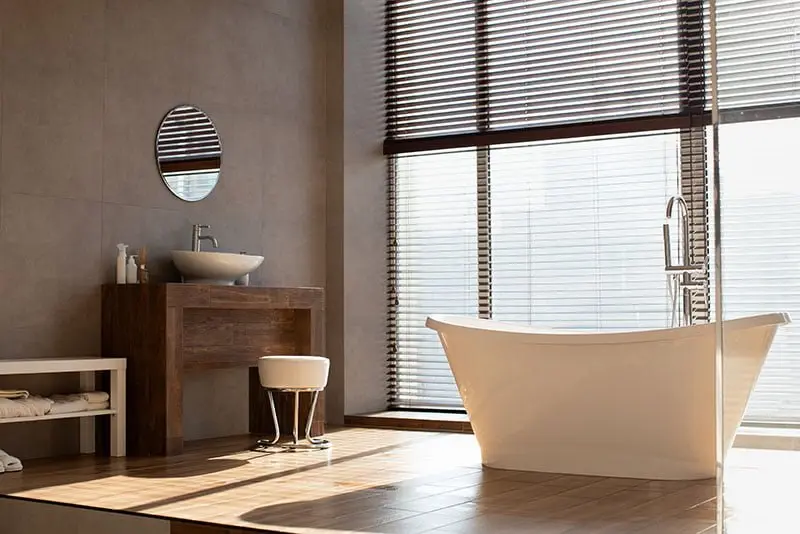
Mortex and microcement get mixed up all the time. Both are seamless, joint-free coatings trowelled on in thin layers over floors, walls, showers and worktops, and on a sample board they can look almost identical. They are not the same material, though. They behave differently around water and they age differently. Choosing between them without understanding why is the quickest route to a bathroom that looks stunning on handover day and starts causing trouble two winters later.
This guide covers what mortex actually is, how it differs from microcement, where each one makes sense, and why, in an Ibiza villa, what the coating is made of matters as much as its colour.
What is mortex?
Mortex is a continuous decorative coating with a lime and natural stone base. It is made from lime and fine mineral aggregates of marble and stone, pigmented throughout the mix, applied by hand in several coats and protected with a final seal. It is not a cement-based product, and that single point explains most of what follows.
Because it is such a fine mortar, mortex is often described as a micro-mortar, and in terms of format that is accurate: it goes on in thin layers. What sets it apart from other micro-mortars is the binder. Lime and stone give it a mineral texture, a warm feel underfoot and a depth of colour that never reads as flat. The tone shifts slightly with the applicator’s hand and with the light, much like a well-executed traditional lime plaster.
One more thing worth knowing before you choose it: mortex ages the way stone does. With use, the surface develops a soft patina, and most owners end up preferring it to the day-one look. If you want a factory finish that never changes, you should know that going in.
Where it is used
Mortex is used on interior walls and floors, walk-in showers and built-in shower trays, fully seamless bathrooms, worktops and integrated basins, built-in furniture, and as the finish on pool shells within a waterproofing system. Its advantage over other coatings shows most clearly wherever there is water.
Mortex vs microcement: what is the difference?
The fundamental difference is composition. Microcement is cement-based, combined with resins and polymers that add flexibility and adhesion. Mortex is formulated with lime and natural stone. Everything else, from how each handles water to the kind of finish it gives, follows from that.
| Mortex | Microcement | |
|---|---|---|
| Base | Lime and natural stone aggregates (marble, stone) | Cement with resins and polymers |
| Behaviour with water | Inherently waterproof; suited to wet areas | Relies more on the sealer applied afterwards |
| Where it excels | Shower trays, whole bathrooms, pool shells | Dry floors and walls, wide range of finishes |
| Look | Mineral, with depth and tonal variation | More uniform; broad choice of textures and colours |
| Ageing | Develops a patina, like stone | Holds its look as long as the sealer is intact |
| Fit with Ibiza architecture | Strong: same family as traditional lime finishes | Neutral: better suited to contemporary interiors |
How each handles water
This is the difference that matters most day to day. Mortex is inherently waterproof, which makes it a natural fit for pool shells, shower trays and surfaces that get wet every day. Microcement leans more heavily on the sealer applied at the end: while that sealer is intact the surface copes well, but once it wears or gets scratched, the base material underneath is more exposed.
That does not mean mortex works alone. In showers, bathrooms and pools it always goes over a sound, properly waterproofed substrate, and the final seal is part of the system. What changes is the safety margin of the coating itself when water is present every single day.
Finish and appearance
Microcement offers a very wide range of finishes and tends to give more even surfaces, which works well in minimalist interiors, commercial spaces and industrial-style projects. Mortex reads differently. It is unmistakably a hand-applied finish, with subtle shifts in tone and a texture that recalls stone and limewashed walls. In a Mediterranean villa, the difference is visible at a glance.
Not a straight contest
Framed as “mortex vs microcement”, it sounds as though one has to win. In practice they are different tools. Some projects call for microcement; in others mortex is the only sensible choice. The mistake is choosing on the name or on a pretty sample without thinking about where the material will actually have to perform.
Where to use each one
When mortex is the right call
- Walk-in showers and continuous shower floors. This is where mortex has the clearest edge, because the surface is wet every day.
- Fully seamless bathrooms, with floor, walls, shower and vanity in a single tone. It is the most requested option in our luxury bathroom renovations in Ibiza.
- Pool shells, as the finish over a waterproofing membrane. Our pool waterproofing guide explains how the system fits together.
- Mediterranean-style interiors where you want continuity with limewashed walls, stone and natural timber.
When microcement makes more sense
- Floors and walls in dry areas where an even surface and a broad choice of finishes are the priority.
- Contemporary interiors with a more urban or industrial feel.
- Projects where a uniform look matters more than mineral texture.
Where neither is the best choice
Some surfaces are simply not suited to a thin continuous coating, whether mortex or microcement: heavily used kitchen floors, areas exposed to hot pans, oils or acidic products on a regular basis, and substrates that move or flex, such as unreinforced timber boards. In those cases natural stone or porcelain is usually the wiser choice, with the seamless coating kept for where it genuinely adds something.
Durability and maintenance
Neither material is better than the substrate it sits on. Most of the stories about “mortex cracking” or “microcement lifting” share the same cause: a substrate with residual moisture, hollow spots or movement, poorly detailed waterproofing underneath, or too little sealer. The coating itself rarely fails. The system around it does.
That is why preparation deserves the most time on site: checking the substrate is sound, dealing with damp before covering it, waterproofing wet areas, using the right primer and respecting drying times between coats.
Looking after mortex
Maintenance is simple, but specific:
- Daily cleaning with water and a pH-neutral soap. No acidic products such as descalers, and no abrasive pads, which damage the sealer.
- Drying the shower in lighter tones to avoid limescale marks from the water.
- Waxing worktops and high-contact areas periodically with a protective wax.
- Checking and renewing the seal from time to time, depending on how hard each surface works.
With that routine, mortex ages well and gains character. Small chips can be repaired with the original mix, and the repair blends in over time as the patina evens out; it shows more on light colours than on dark ones.
Looking after microcement
Day-to-day cleaning is much the same. The difference is that microcement’s protection depends more on its sealer, so when the seal wears in walkways or showers it needs renewing for the surface to keep defending itself.
Why mortex suits Ibiza
An Ibiza villa puts any coating to the test: strong sun, large swings between day and night temperatures, ambient humidity and, near the sea, salt-laden air. On top of that comes an architecture with a very distinct identity, built over centuries from stone and lime.
Lime belongs to the island. The limewashed walls, plasters and white façades of traditional Ibicenco architecture are all lime. A lime and stone coating is not imitating that architecture; it comes from the same family of materials. That is why mortex sits so naturally in a restored finca or a villa with Mediterranean lines, and why we specify it so often in our full villa renovations.
Salt and damp demand a system, not a product. On the seafront, airborne salts and moisture rising through walls will eventually show up in any finish applied without dealing with the cause first. White efflorescence at the base of a wall is not something you cover up with a coating; it is diagnosed and treated first, as we explain in our guide to salt efflorescence on coastal walls.
Mediterranean light changes colours. Warm greys and stone tones cope well with the way light shifts through the day. Whites and creams echo traditional limewash but show dust and water drops more readily. Very dark tones absorb more heat in south-facing rooms. Choosing the colour from a sample viewed in the house’s own light avoids surprises.
What to ask your mortex applicator
Plenty of contractors offer mortex, and they do not all work the same way. Execution matters more than the product label. Before you commit, it is worth asking:
- How the substrate will be checked and prepared, and what happens if damp turns up.
- What waterproofing goes underneath in showers, bathrooms and pools.
- How many coats of mortex and sealer the system includes, and which drying times are respected.
- What maintenance the surface needs, and who will explain it to you or your housekeeping team.
Frequently asked questions
What is mortex made of?
Mortex is a continuous decorative coating with a lime and natural stone base, using fine marble and stone aggregates pigmented throughout the mix. It is hand-applied in thin layers and protected with a final seal, and it is used on walls, floors, showers, worktops and pool shells.
Is mortex the same as microcement?
No. Microcement is cement-based, with resins and polymers; mortex is formulated with lime and natural stone. That makes mortex inherently waterproof and better suited to wet areas, while microcement relies more on its sealer and performs best in dry areas.
Can mortex be used in a shower?
Yes, it is one of its most common uses. It goes over a sound, properly waterproofed substrate, with the falls to the drain correctly formed and a seal suited to a wet area.
Can mortex be applied over existing tiles?
Yes, provided the tiles are firmly bonded and the surface is prepared to ensure adhesion. Loose or hollow tiles have to come out first. If the preparation is rushed, the grout lines underneath can end up showing through the finish.
How much does mortex cost?
It depends on the project: the area involved, the condition of the substrate, whether waterproofing or repairs are needed first, the type of space (bathroom, pool, floor) and the finish chosen. That is why we do not quote fixed prices without seeing the property; we prepare a quote after a site visit.
How long does a mortex finish last?
On a well-prepared substrate and with the right maintenance, mortex is a durable finish that gains character over time. How long it lasts depends mainly on the preparation, how hard each surface is used and whether the seal is renewed when it is due.
If you are weighing up mortex or microcement for your villa, tell us about your project and we will assess it on site.